
If you have ever felt a sharp, lightning-bolt pain shoot through your arm while lifting a grocery bag or felt a dull, persistent ache after a long day at your desk, you are not alone. Our elbows act as the hinges that allow us to eat, type, drive, and lift. But because we use them for almost everything, they are incredibly prone to wear and tear.
When the pain starts, the first instinct for many is to head to the local drugstore or browse online for a quick fix. You see dozens of options: thick neoprene sleeves, thin straps that look like watches, and complex braces with metal hinges. At the same time, your friend might be telling you to skip the gear and go straight to a physiotherapist.
It leaves most people wondering: Do I need to support my arm with a product, or do I need to fix the way my body moves?
Let’s break down!
Understanding the “Why” Behind the Pain
Before we look at the solutions, we have to understand the problems. Most elbow pain falls into two categories:
- Lateral Epicondylitis (Tennis Elbow): This is pain on the outside of the elbow. You don’t have to play tennis to get it; it is usually caused by repetitive gripping and twisting, like using a screwdriver or a computer mouse.
- Medial Epicondylitis (Golfer’s Elbow): This is pain on the inside of the elbow. It often comes from repetitive pulling or lifting movements.
In both cases, the tendons, the thick cords that attach your muscles to your bones, have become overloaded.
Elbow Braces and Bands
When you are in the middle of a flare-up, a brace feels like a security blanket for your arm. There are two main types of support you will encounter.
The Tennis Elbow Band
This is a small, non-stretchy strap that you wrap around your forearm, just below the elbow. It usually has a small gel pad or a firm foam block.
The way it works is quite clever. It acts as a counterforce. By putting pressure on the muscle belly, it changes the way the tension travels up your arm. Instead of all that pulling force hitting the injured tendon at the bone, the strap absorbs a large portion of it.
- When it works: It is great for active pain. If you have to keep working or performing a specific task that hurts, the band can take the edge off immediately.
- The Downside: It doesn’t heal the tendon. It just manages the symptoms while you wear it.
The Gym Elbow Support Sleeve
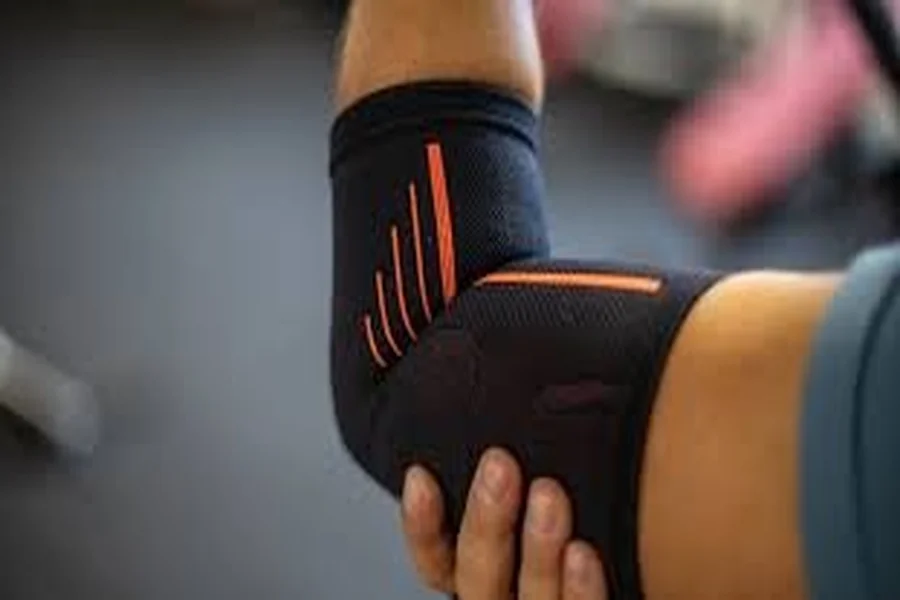
If you spend a lot of time lifting weights, you have probably seen people wearing compression sleeves. These are usually made of neoprene or knitted elastic. Unlike the tennis elbow band, these cover the entire joint.
They work through compression and heat. By squeezing the area, they increase blood flow and ultimately provide proprioception. It is just a fancy word for your brain being more aware of where your arm is in space. This can totally help you maintain better form during heavy lifts like bench presses or overhead extensions.
- When it works: These are best for general joint warmth and preventing minor strains during heavy activity.
- The Downside: If you rely on them too much, your muscles can get lazy. You want your muscles to do the work of stabilizing the joint, not the fabric.
The Long-Term Fix
A physiotherapist doesn’t just look at where it hurts; they look at why it started hurting in the first place.
Often, elbow pain isn’t actually an elbow problem. It might be a wrist weakness or a shoulder instability. If your shoulder is weak, your elbow has to work twice as hard to stabilize your arm when you pick something up. Eventually, the elbow gives out.
A therapist will typically use a three-step approach:
- Pain Management: They might use massage, ultrasound, or dry needling to calm the inflammation down in the short term.
- Load Management: They teach you how to do your daily tasks without aggravating the injury.
- Strengthening: This is the most important part. Through specific exercises, like eccentric loading (slowly lowering a weight), they force the tendon to rebuild itself stronger than it was before.
- When it works: This is the gold standard for permanent recovery.
- The Downside: It takes time, effort, and sometimes money. You can’t just wear physiotherapy; you have to do the work.
Physiotherapy vs. Elbow Braces
So, which one works best? The answer is that they work best when they work together, but they serve completely different roles.
Choose a Brace If:
- You have a deadline at work or a competition this weekend and you just need to get through the day without wincing.
- The pain is mild and only happens during one specific activity.
- You want a reminder not to overextend your arm.
Choose Physiotherapy If:
- The pain has lasted longer than two weeks.
- The pain is getting worse or waking you up at night.
- You find yourself losing grip strength (like struggling to open a jar).
- You want to make sure the pain never comes back.
Final Thoughts
Elbow pain is frustrating because it affects almost everything we do. Whether you choose a tennis elbow support band to get through your afternoon or commit to a physiotherapy program to rebuild your strength, the most important thing is to listen to your body. A brace can help you play the game today, but it won’t teach your body how to win the long-term battle against injury. If you are struggling, use a support band for immediate relief, but make an appointment with a professional to fix the root cause.